ANTIQUESTO ANTIQUELLO Gaia solo show | 999Contemporaray’s The Popping Club | Apr 30 – Sep 30 | Via Baccina 84, Roma – Italy | Opening reception Thursday april 30 – H 19.00 / 7pm | Preview inqury: sales@thepoppingclub.org
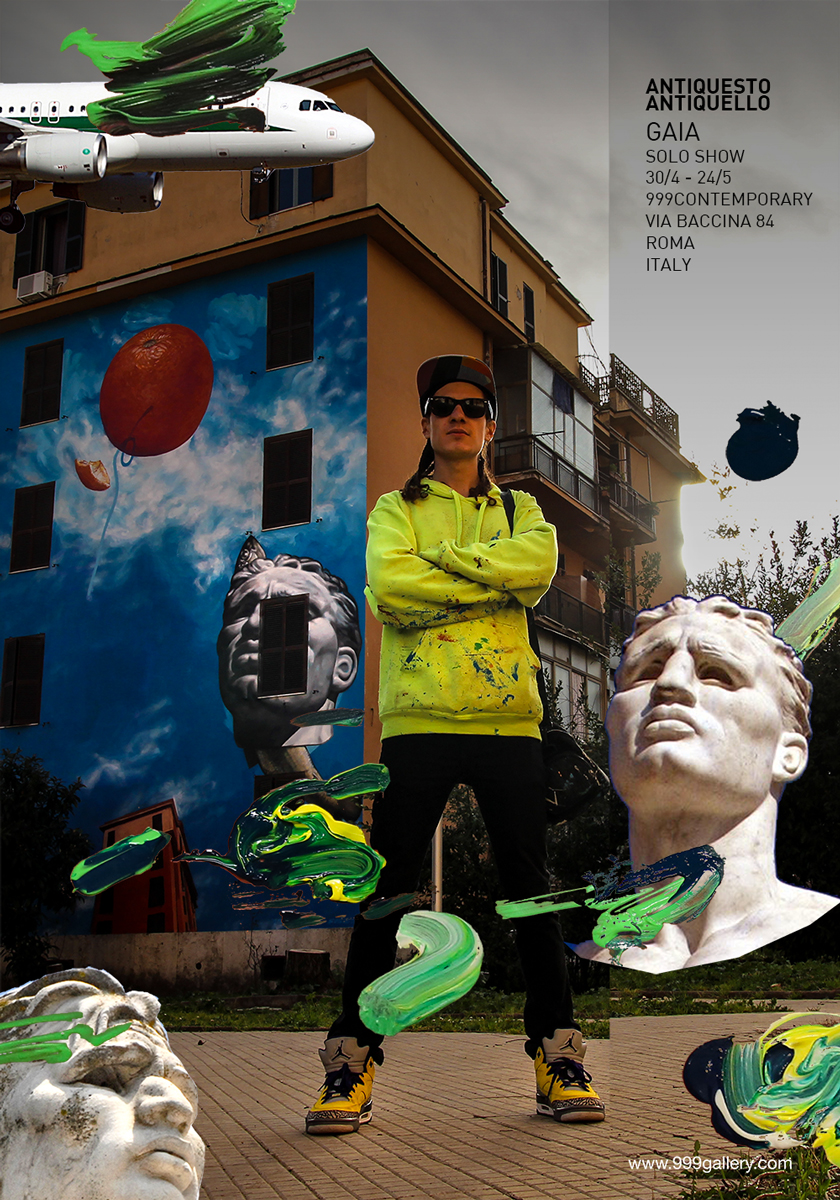
Gaia
Antiquesto antiquello sits uncomfortably in the space between contemplation and advocacy. The project responds to the meandering notion of the immigrant in Italian society through a variety of different formal investigations. The stranger, the tourist, the visitor, the refugee are displayed on the same stage. Investigation into the familial narrative of the artist as white, American, and fourth generation Italian serves as a counterpoint to the crisis confronting Europe after the tumult of the Arab Spring.
Stefano S. Antonelli
According to Lotman, who has as a point of departure the mathematical theories of Aleksandrov, Space is “the ensemble of homogeneous objects (phenomena, conditions, functions, figures, variable meanings, etc.), among which exist relationships similar to common spatial relationships (continuity, distance, etc.).” Moreover, if we consider the ensemble of objects as a space, each object retains only those aspects which pertain to its spatial relationship to the whole and to other objects while losing its individual identity. For example, the topological opposition of “high” to “low” could represent and overwhelm the opposition of “good” to “evil”, “darkness” to “light”, “night” to “day” and so on. Indeed, an object assumes particular attributes when juxtaposed with other objects which, by nature of contrasting spatial qualities, bring out less evident or significant characteristics. The most important opposition, in this vision, is that definable in spatial terms. From this comes the possibility of simulating in spatial terms concepts which in and of themselves have no inherently spatial nature: The language of spatial relationships results in one of the fundamental means of the comprehension of reality. The concepts “high-low”, “right-left”, “close-far”, “open-closed”, “limited-unlimited”, “discontinuous-continuous” are materials for the construction of cultural models with an entirely non-spatial content and acquire the meaning of “precious-worthless”, “good-evil”, “self-other”, “accessible-inaccessible”, “mortal-immortal”, etc. The most common social, religious, political, and ethical models of the natural and spiritual worlds are inevitably viewed in terms of spatial characteristics (at times as oppositions such as “heaven-earth” or “earth-underworld” [tripartite vertical structures organized according to the axis “high-low”], at others along the lines of socio-political hierarchy with the known distinction between “high” and “low” class and at still others as ethical or moral evaluation of the opposition “destra-manca” [“right-wrong” or “right-left”]: cf. – Lotman. Judgments about thoughts, occupations, professions of high or low social standing, the identification of “close” as something comprehensible or related to the self, and of “far” as incomprehensible or alien, all are framed in world models built neatly as spatial signs. Consequently, the presentation of Time in the text could also be seen in terms of spatial relationships, “now” being readily absorbed into “here” and so on. The world-view which a culture fashions for itself could in this way assume spatial traits. According to the russian scholar, Space is distinguished by “Boundary” into two parts: one external and one internal. The semantic translation of the model could be extremely varied and complex. For example, the “inside” vs. “outside” opposition could be thematicized in the world-views “order” vs. “disorder”, “shelter” vs. “violence”, “nature” vs. “nurture”. These notions shed light on the existent binary oppositions of the narrative: “countryside” (including “peace”, “garden” and “locus amoenus”) vs. “city” (which signifies “plague”, “violence” and “chaos”) as well as on those implied in the narration structure: “frame” vs. “short stories”. The “language of spatial relationships” thus provides for a specific understanding of contemporary reality.
[rocketgalleries id=”1″]
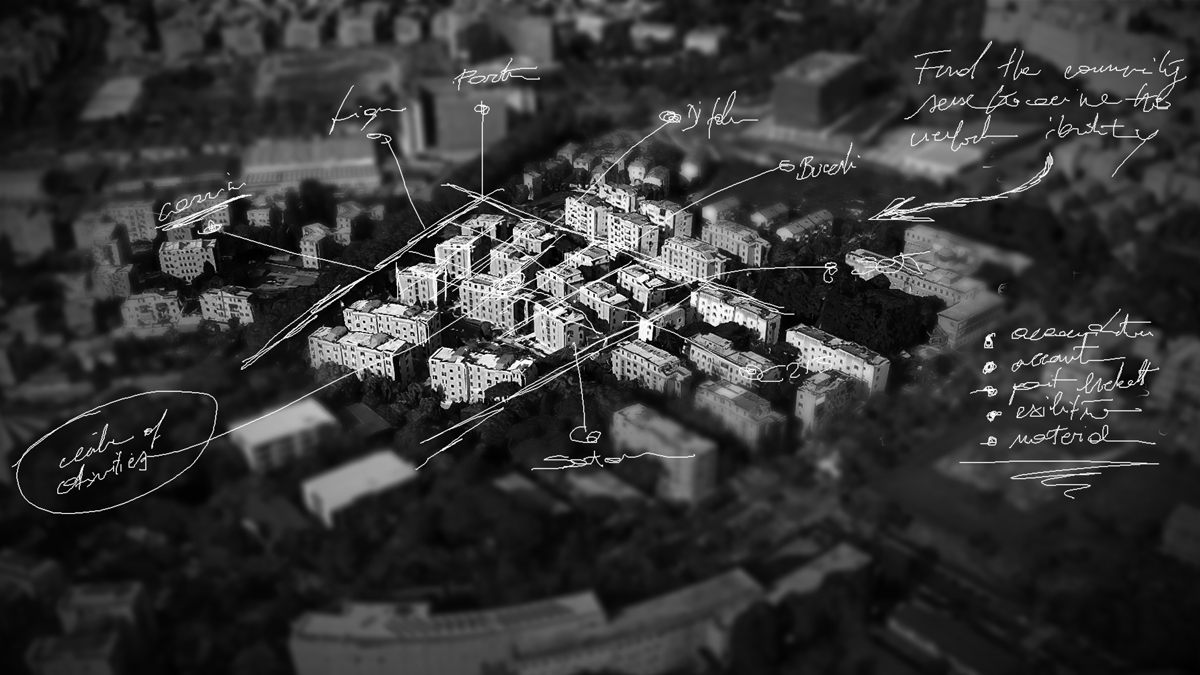 BIG CITY LIFE è il progetto di arte pubblica partecipata per la riqualificazione urbana, culturale e sociale di quelle zone grigie della città partendo dal quartiere storico di Tor Marancia, che ha preso il via l’8 gennaio scorso per concludersi il prossimo 27 febbraio. Ideato da 999Contemporary, organizzato da Francesca Mezzano e curato da Stefano S. Antonelli e Gianluca Marziani, il progetto è sostenuto economicamente da Roma Capitale Assessorato alla Cultura, Creatività, Promozione artistica e Turismo, da Fondazione Roma-Arte-Musei, dalla stessa l’associazione culturale 999Contemporary e condiviso con ATER del Comune di Roma, l’azienda territoriale per l’edilizia residenziale del Comune di Roma, con lo scopo di trasformare la borgata romana in un distretto di arte pubblica contemporanea unico al mondo, coinvolgendo in questo processo la comunità locale, le scuole e le associazioni di quartiere. Gli oltre cinquecento abitanti delle case popolari dello storico lotto 1 di Tor Marancia di proprietà ATER del Comune di Roma, incontreranno venti artisti, convenuti a Roma da dieci diversi paesi per dipingere l’intero quartiere. L’opera realizzata da ogni artista sarà il risultato di questo incontro per un totale di venti dipinti murali monumentali, realizzati sulle facciate delle undici palazzine del comprensorio di via di Tor Marancia 63. Gli allievi della scuola elementare Dalla Chiesa, delle medie Settimia Spizzichino e dell’istituto superiore Caravaggio saranno i protagonisti dei laboratori creativi tenuti dagli artisti, mentre lo staff di 999Contemporary si occuperà dei laboratori professionali destinati all’associazione culturale Rude, costituita dai ragazzi di Tor Marancia appositamente per la promozione, manutenzione e valorizzazione del patrimonio artistico, che dal 27 febbraio prossimo farà di Tor Marancia un vero e proprio museo pubblico vivente aperto a tutti sette giorni su sette, ventiquattro ore su ventiquattro. Solo alcune opere, tuttavia, saranno visibili dalla strada, per ammirarle tutte bisognerà entrare nel comprensorio e per approfondire la visita, un libro e un documentario racconteranno genesi, difficoltà, intenzioni, entusiasmi e le opere di questa incredibile avventura tra arte, azione, educazione ma soprattutto: partecipazione. Dal 27 febbraio Roma avrà un’attrazione tutta nuova che avrà come protagonista l’arte urbana contemporanea attraverso le espressioni di venti tra i suoi più importanti interpreti internazionali, unica nel suo genere e nel segno della continuità storica alla vocazione di questa città di ospitare la migliore arte del mondo da oltre duemila anni. BIG CITY LIFE è patrocinato da Roma Capitale Municipio Roma VIII che già vanta nel suo territorio oltre quaranta grandi opere nel quadrante tra il quartiere Ostiense e San Paolo, in quello che il New York Times ha definito l’Ostiense District, ed è realizzato in collaborazione con Atac e l’agenzia di comunicazione Pescerosso ma è solo grazie alla sponsorizzazione tecnica di Sikkens, che il progetto garantirà durata museale dei dipinti grazie alla straordinaria qualità dei materiali disponibili sul mercato.